Bridge-Support-Reinforcement

Structural integrity depends on load distribution, and the data within custom countertops rancho cucamonga alone in the kitchen holds shows that a granite slab requires specific bracing. Any worktop installed in Rancho Cucamonga, CA needs careful attention to the physics of stone weight. Thin spans create tension that natural stone cannot always absorb without help.
The Mechanics of Bridge Support
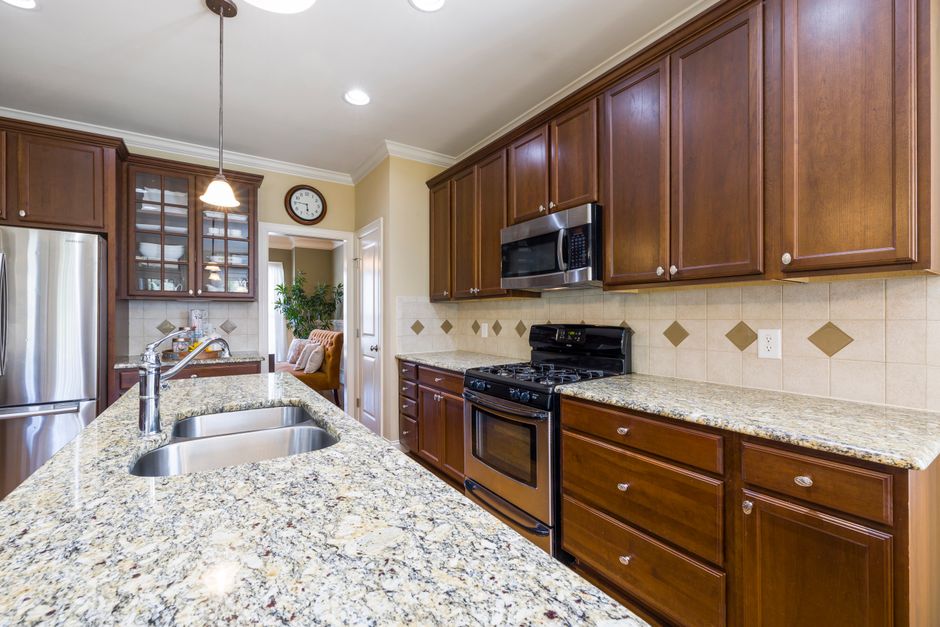
Thin sections of quartzite or marble often fail at the point of an overhang. A bridge support involves installing steel or heavy duty aluminum stiffeners underneath the slab. These rods prevent the stone from flexing downward under the weight of a sink cutout or heavy appliances. Without this reinforcement, the tension at the seam leads to immediate cracking. A steel sub-top provides the necessary rigidity to maintain the shape of the stone through long term use.
Managing Heavy Cutouts

An undermount sink cutout creates a significant weakness in the material. The weight of a full basin pulls on the stone edges. Installing stiffeners around the perimeter of the cutout ensures the load is transferred to the cabinetry rather than the stone itself. This process is mandatory for any porcelain or thin slab installation where a large void exists. The support must be flush to avoid interfering with the cabinet structure or the mounting hardware.
Edge Profiles and Stress Points
The choice of an edge profile changes how stress travels through the material. A bullnose edge adds mass, but a thin eased edge leaves the stone vulnerable at the perimeter. When a waterfall edge is planned, the vertical drop creates a pivot point. Metal reinforcement must run through the entire length of the mitered joint to prevent the corner from snapping. A digital template ensures the stiffener placement aligns perfectly with the internal structural requirements of the stone.
Seam Placement and Reinforcement
A seam placement near a heavy load area increases the risk of failure. It is better to locate a seam over a cabinet rail or a solid support beam. If a seam must exist near a span, the use of epoxy and mechanical bracing is the only way to maintain the bond. A remnant piece used for a small island still requires the same structural logic. Even small pieces of quartz or soapstone react to temperature changes and weight, making the underlying support framework a fixed requirement of the installation process.